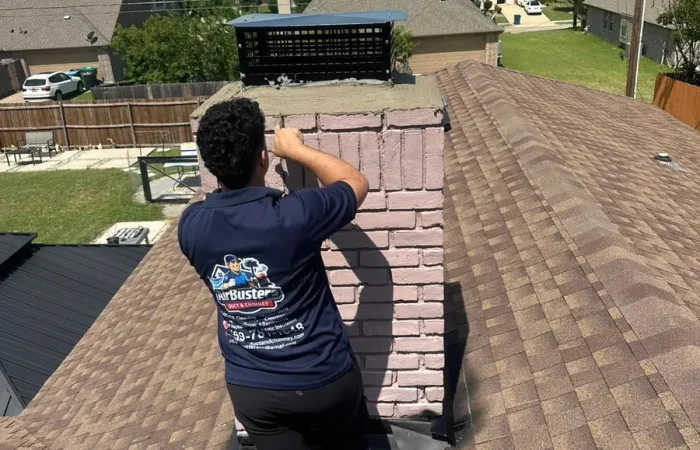
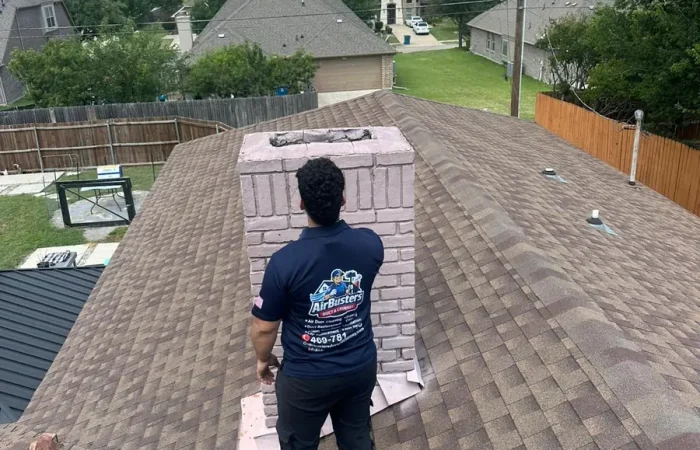
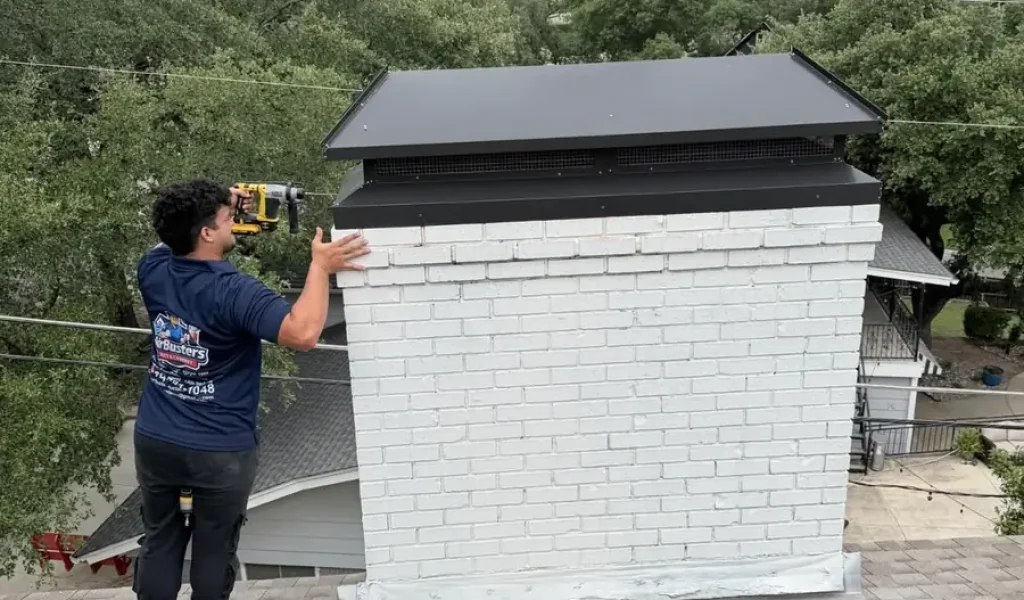
They sit at the top of the chimney but do different jobs. The crown is the sloped concrete or mortar slab that covers the whole masonry top and sheds water off the structure. The cap is the metal cover fitted over the flue opening itself, keeping out rain, animals, and embers. Most chimneys need both working together.
Common signs are visible rust or corrosion, a cap that has come loose or blown off in a storm, bent or missing spark-arrestor mesh, or animals and debris getting into the flue. Water dripping down inside the chimney or a damper that has rusted are also strong indicators. If any of these sound familiar, it is worth having the cap inspected.
Yes, in most cases. Crowns crack from the constant expansion and contraction of North Texas heat and occasional freeze-thaw cycles, plus normal settling over time. Small cracks can be repaired and sealed with a waterproof crown coating, while a crown that has broken up badly is better rebuilt. Catching it early keeps water out of the masonry below.
A cap is well worth having even if nothing has gone wrong yet, because its whole purpose is prevention. Open flues are a standing invitation to rain, nesting birds and squirrels, and blown-in debris, and the damage they cause builds up quietly before you ever notice it. A properly fitted cap is a small, one-time safeguard against water intrusion, animal entry, and stray embers.
Air Busters provides chimney cap and crown services across the Dallas–Fort Worth Metroplex, including Dallas, Fort Worth, Plano, Frisco, Irving, Denton, Garland, and McKinney.