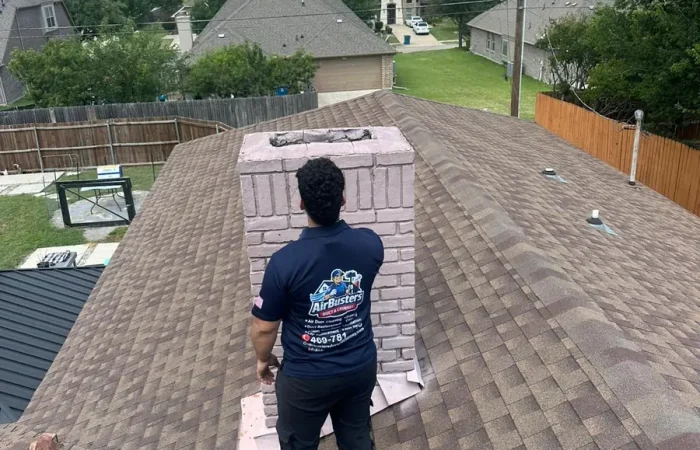
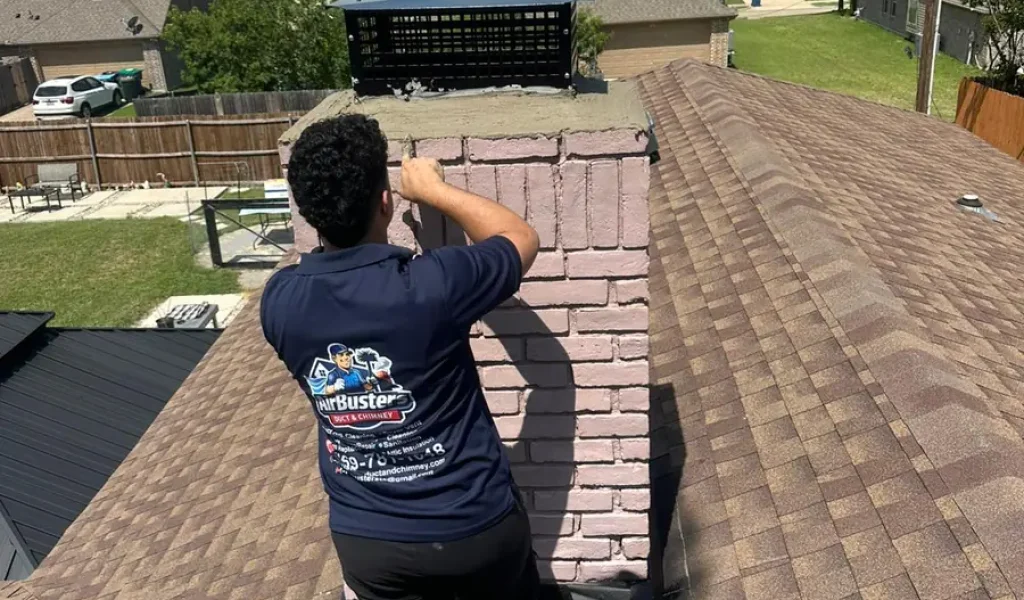
Common signs include water stains on the ceiling or wall around the fireplace, a damp or musty smell after rain, white efflorescence on the exterior brick, rust on the damper or firebox, or crumbling mortar. If you notice any of these after a DFW storm, it's worth having the chimney inspected before the damage spreads.
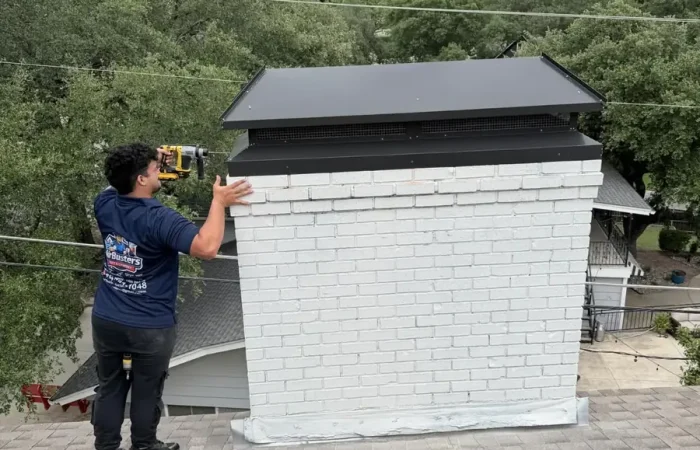
Most leaks trace back to five culprits: a cracked chimney crown, failed or rusted flashing where the chimney meets the roof, a worn or missing chimney cap, deteriorated mortar joints, or porous, unsealed masonry that absorbs wind-driven rain. Often more than one is at play, which is why we identify the true source before repairing.
Yes. Water that enters through the chimney doesn't stay there - it rots roof framing and wall studs, rusts the damper and firebox, stains ceilings and drywall, and feeds mold growth. Catching and sealing a leak early is far less costly and disruptive than repairing the structural and interior damage it causes later.
It depends on the source and the fix. A cap installation or minor flashing repair is often completed in a single visit, while a crown rebuild, extensive tuckpointing, or full waterproofing may take longer. After every repair we water-test the chimney to confirm it's watertight before we call the work finished.
Air Busters provides chimney leak repair across the Dallas–Fort Worth Metroplex, including Dallas, Fort Worth, Plano, Frisco, Irving, Denton, Garland, and McKinney.